
Knob and Tube, Cloth, and Aluminum Wiring: Rewiring Historic New Orleans Homes
Historic New Orleans homes often contain one of three outdated wiring systems: knob-and-tube, cloth-insulated, or aluminum branch wiring. All three pose fire and shock hazards today and can prevent you from getting homeowners insurance. A licensed electrician can identify your home’s wiring type and recommend whether a full rewire or targeted upgrades will bring your home into code compliance and modern safety.
What Are the Three Legacy Wiring Types?
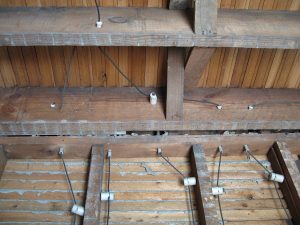
Knob-and-tube wiring, installed primarily from 1900 to 1930, uses individual copper wires wrapped in rubber and cloth, hung on ceramic knobs and threaded through ceramic tubes. The wires run separately with no ground conductor. Cloth-insulated wiring became common through the 1950s, bundling two or more wires in a fabric outer sleeve, also without a ground. Aluminum branch wiring appeared in the 1960s and 1970s for circuit feeders and branch runs. All three worked for decades but have become serious liabilities.
How to Identify Each Wiring Type in Your Home
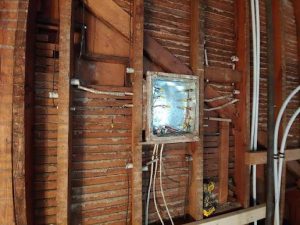 Knob-and-tube is unmistakable in an attic or crawlspace—individual wires hanging on ceramic knobs and passing through ceramic tubes. The rubber insulation becomes brittle and crumbly after 80 to 100 years. Cloth-insulated wiring appears as a wrapped bundle, usually yellowish or grayish in color. When visible at old outlets or cut into, the fabric outer layer is obvious. Aluminum branch wiring shows bright aluminum conductors at the breaker panel and in walls, thicker than modern copper for the same amperage. A licensed electrician can identify your wiring type during a home inspection.
Why Each Wiring Type Is Dangerous Today
Knob-and-tube fails because rubber insulation becomes brittle after a century and flakes away, exposing bare copper. This creates shock and fire hazards, especially where wiring is later covered by drywall or insulation. The lack of a ground conductor means no ground-fault protection. Cloth-insulated wiring deteriorates the same way—fabric rots and rubber cracks, exposing live conductors. Aluminum branch wiring fails differently. Aluminum expands and contracts at a different rate than copper. At terminations where aluminum meets a copper breaker lug, micro-arcing and loose connections develop over time. These hot spots can ignite wire insulation and nearby wood or plaster.
Insurance and Code Compliance Challenges
Many homeowners insurance carriers will not issue new policies if a home contains knob-and-tube or cloth-insulated wiring. Some exclude fire coverage entirely for these older systems. Aluminum wiring may be permitted if connections are professionally inspected and maintained. If your insurer flags your wiring, rewiring may be your only path to coverage. Contact your insurance agent and ask for a written statement about which wiring types they accept. That statement will guide your electrician’s scope of work and help you prioritize which circuits to rewire first.
Whole-House Rewiring vs Targeted Upgrades
A whole-house rewire pulls new modern wiring throughout the home, leaving old wiring dead in the walls. It is the most thorough solution but also the most expensive and invasive, especially in plaster-walled historic homes where cutting into walls damages original finishes. If your home has knob-and-tube only in the attic and basement, a targeted rewire of those circuits may satisfy your insurer and code requirements. Work with your ELECTRICIAN to identify the highest-risk circuits and those serving your current electrical needs. Some owners rewire the main panel and high-demand circuits like kitchen and bathrooms, leaving other circuits alone until future renovations allow easier access.
Rewiring Without Damaging Historic Character
 The challenge in rewiring a historic New Orleans home is keeping plaster walls intact. Plaster cannot be easily patched without visible seams. New outlet locations or surface-mounted conduit can alter the aesthetic of a shotgun house or Creole cottage. Work with an electrician experienced in historic homes. Fish new wires through existing wall cavities and conduit runs whenever possible. If surface-mounted conduit is necessary, use paintable conduit or period-appropriate materials in less visible areas. Coordinate rewiring with other repairs—if you are opening walls for plumbing or HVAC work, rewiring becomes easier. Plan the electrical layout with your electrician before work begins.
Permits and Inspections Required in New Orleans
Any rewiring in New Orleans and surrounding parishes requires a permit from the local building department. Permits ensure the work meets the National Electrical Code and local amendments, protecting you and future owners. Your electrician will apply for the permit, arrange inspections at rough-in and final completion, and coordinate with the inspector. Some inspectors require removal or isolation of old wiring, though dead wiring can often remain safely in walls. Permits cost money and time, but they prove to insurers and future buyers that work was done correctly.
Frequently Asked Questions
Can I leave old wiring in the walls if I rewire?
Yes. Dead wiring can remain in the walls as long as it is de-energized. Turn off the old circuits at the breaker, remove the breaker, and cap the wire at the panel. Some electricians recommend pulling old wire out, but it is not always necessary. Confirm with your local inspector what is acceptable.
How long does a full rewire take in a plaster-wall home?
A full rewire in a plaster home typically takes one to three weeks depending on size and method. If new conduit is installed on the surface, work proceeds faster. If wires are fished through existing cavities, it takes longer. Plan for dust and some wall disturbance during construction.
Will rewiring increase my home’s value?
A code-compliant electrical system is expected in any home and does not often add significant market value on its own. However, it is essential to passing inspection and meeting insurance requirements. Think of rewiring as necessary infrastructure, like a roof or foundation repair.
About MK Electric Man
MK Electric Man has been serving New Orleans and surrounding parishes with licensed electrical work for years. We specialize in whole-house rewiring for older homes with knob-and-tube, cloth, aluminum, and flood-damaged wiring,